The claim
“Carbs are bad for you”
Depends on quality and quantity: refined carbs in excess track with worse outcomes in cohort studies, fibre-rich carbs track with better ones — 'carbs' isn't one category.

Not medical advice — general information based on published research.Full disclaimer →
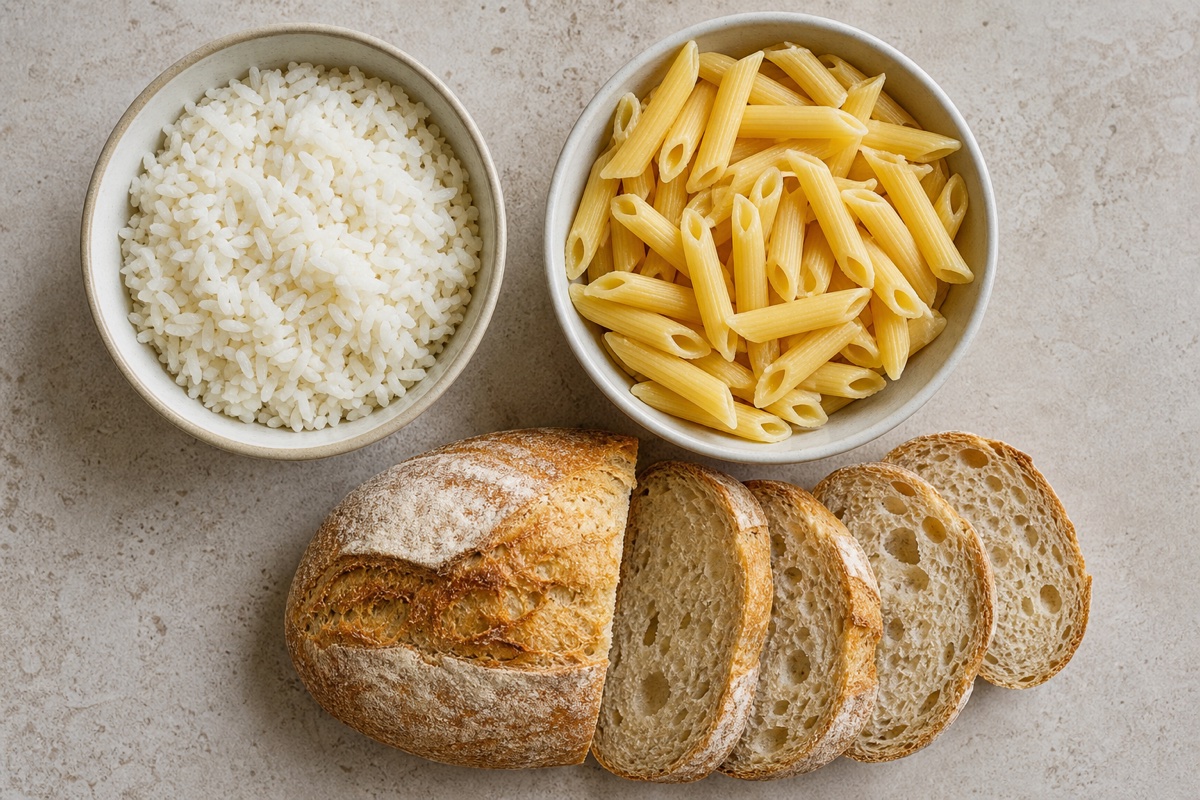
“Carbs are bad for you” treats an entire macronutrient category — everything from lentils to lollies — as one thing. The large cohort evidence says the category doesn’t hold together as a single claim; quality and quantity both matter, and they cut in different directions.
The PURE study, a large observational cohort published in The Lancet in 2017 [1], followed over 135,000 people across 18 countries and found that very high carbohydrate intake (in the highest quintile of intake, which in this cohort skewed toward refined carbohydrate sources) was associated with higher mortality risk, while higher total fat intake was associated with lower mortality risk in the same analysis. This is the study most often cited by low-carb advocates — and it’s worth being precise about its limits: it’s observational, not a randomized trial, so it shows association, not proof of causation, and the authors themselves have cautioned against reading it as “eat less carbohydrate, more saturated fat” advice.
A more targeted 2019 series of systematic reviews and meta-analyses in The Lancet [2] looked specifically at carbohydrate quality rather than treating carbohydrate as one bucket. The consistent finding: higher fibre intake and whole-grain, lower-glycaemic-index carbohydrate sources associate with meaningfully lower risk of cardiovascular disease, type 2 diabetes, and colorectal cancer, compared with refined, low-fibre carbohydrate sources.
Put the two studies together and the honest answer isn’t “carbs are good” or “carbs are bad” — it’s “which carbs, and how much.”
This is exactly the kind of claim the It Depends verdict exists for: the “depends on” variable here is concrete and specific — carbohydrate quality (fibre content, degree of processing, glycaemic index) and total quantity relative to overall diet, not carbohydrate as an undifferentiated category. A diet built around vegetables, legumes, and whole grains and a diet built around white bread and soft drink are both “high carb,” and the outcome evidence treats them very differently.
Common questions
Is fibre the deciding factor in whether a carb source is 'good' or 'bad'?
It's one major factor, along with the degree of processing and the overall nutrient package a carbohydrate food comes with — whole, fibre-rich carbohydrate sources consistently associate with better outcomes than refined, low-fibre versions of similar carbohydrate content.
Does the PURE study mean you should eat more fat and less carbohydrate?
The PURE study is a large observational cohort, not a randomized trial, and its authors have been explicit that it shouldn't be read as a recommendation to swap carbohydrate for saturated fat specifically — it's evidence that very high refined-carbohydrate intake correlates with worse outcomes, not that carbohydrate itself should be minimised.
Sources cited
- [1]Dehghan M, Mente A, Zhang X, et al. (PURE study investigators) (2017). Associations of fats and carbohydrate intake with cardiovascular disease and mortality in 18 countries from five continents (PURE): a prospective cohort study . The Lancet.Observational
- [2]Reynolds A, Mann J, Cummings J, et al. (2019). Carbohydrate quality and human health: a series of systematic reviews and meta-analyses . The Lancet.Meta-analysis