How Much Protein Do You Actually Need?
Not the 25g-every-three-hours number the supplement industry sells you — here's what the dose-response trials actually show.

Not medical advice — general information based on published research.Full disclaimer →
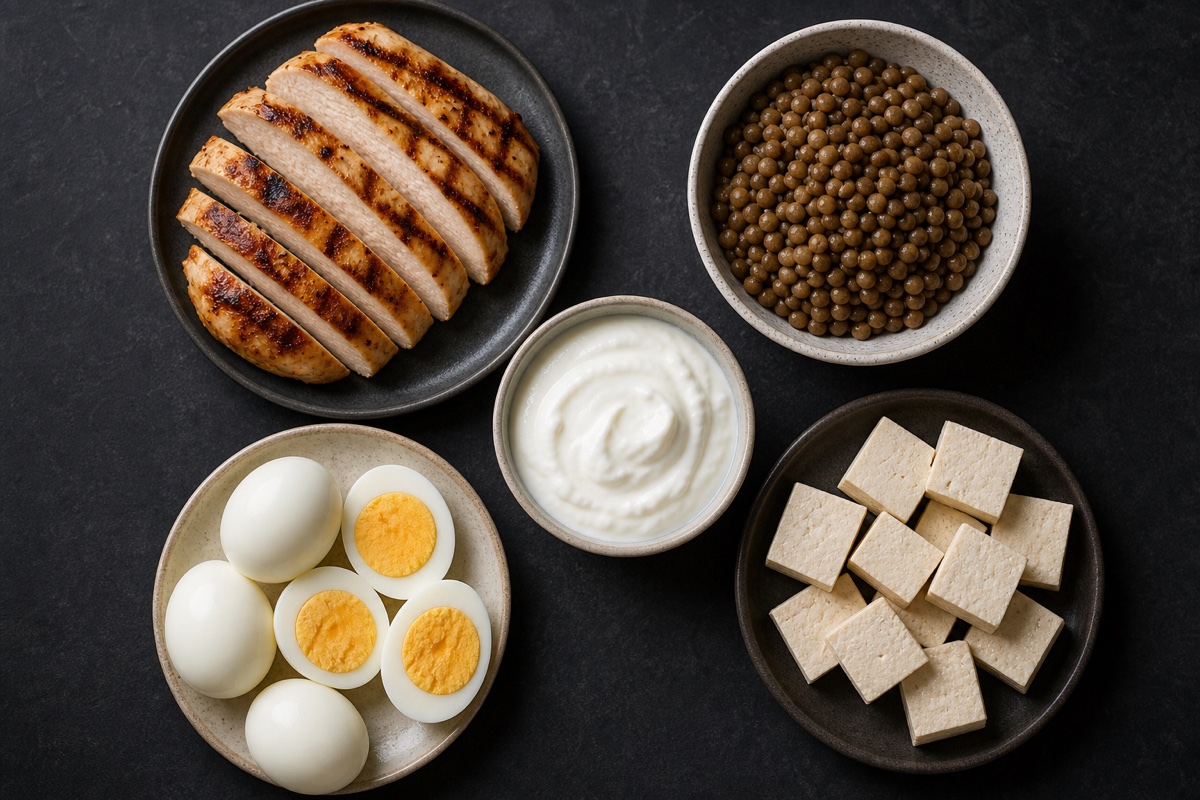
Short answer
For building or maintaining muscle, the evidence points to roughly 1.6g of protein per kilogram of bodyweight per day, with gains flattening out above that in most resistance-trained adults. More isn't harmful, it's just not doing extra work once you're past that point.
On this page
You do not need 25 grams of protein every three hours, and you almost certainly don’t need as much as your gym’s supplement fridge implies. The number worth remembering is roughly 1.6 grams per kilogram of bodyweight per day — and it comes from an actual dose-response analysis, not a marketing department.
Where the 1.6g/kg figure comes from
The most-cited answer here is a 2018 systematic review and meta-regression in the British Journal of Sports Medicine [1], pooling 49 studies and roughly 1,863 resistance-trained participants. Instead of just asking “does more protein help,” the authors modelled the actual dose-response curve — how much extra muscle mass each additional gram of protein bought a lifter, at different intake levels.
The curve wasn’t a hard cliff — it was a plateau. Benefits from additional protein intake were clear up to somewhere in the 1.6g/kg/day range, and then flattened out. That doesn’t mean 1.8 or 2.0g/kg is harmful, it means the marginal return on each extra gram gets very small very fast once you’re already in that zone.
For a 75kg (165lb) lifter, 1.6g/kg works out to about 120g of protein a day — spread across meals, that’s very achievable without powders, and nowhere near the “every three hours or you’ll lose gains” framing that gets repeated in gym culture.
Distribution matters less than total intake
A related question is whether protein needs to be evenly spaced across the day to “count.” A 2018 review in the Journal of the International Society of Sports Nutrition [2] looked specifically at how much protein a single meal can actually put to use for muscle building, and at how total daily distribution affects outcomes.
The takeaway: once total daily protein is adequate, the specific distribution across meals has a real but comparatively small effect — nowhere near large enough to justify obsessive meal-timing behaviour. Hitting your daily number in three meals instead of six isn’t sabotaging anything.
Total daily protein is doing almost all of the work. Timing is a rounding error by comparison.
Does it matter if the protein is from plants?
A common worry is that plant protein “doesn’t count” the same way animal protein does, because individual plant sources are often lower in one or more essential amino acids (lysine in wheat, methionine in legumes, for example). A 2016 review in Nutrition & Metabolism [3] covers this directly: protein quality differences are real at the level of a single food, but they mostly wash out once you’re eating a varied diet across a full day, because different plant foods are low in different amino acids and complement each other.
This isn’t a reason to avoid plant protein sources, and it isn’t a reason to obsessively “combine” proteins within a single meal either — the old idea that you needed rice and beans in the same sitting to get a complete protein has been debunked for years; your body pools amino acids across a day, not a single plate.
What this actually means day to day
- If you’re resistance training, aim for something in the neighbourhood of 1.6g/kg/day — more isn’t dangerous, it’s just not buying you much.
- Spread it across your normal meal pattern; you don’t need a post-workout window.
- A plant-forward diet with reasonable variety covers your amino acid needs without any special combining rules.
If you want the tracker version of this: the habit tracker’s daily protein target is built directly off this evidence, not a round-number guess.
Common questions
Do you need protein within 30 minutes of a workout?
No. Meta-analyses of nutrient timing trials find no meaningful advantage to protein consumed immediately post-workout versus later in the day, as long as total daily intake is adequate. See our myth-vs-fact entry on the anabolic window for the full breakdown.
Is plant protein incomplete?
Individual plant sources can be lower in one or more essential amino acids, but a varied plant diet across a day easily covers the full amino acid profile. This isn't a reason to avoid a plant-forward diet.
Sources cited
- [1]Morton RW, Murphy KT, McKellar SR, et al. (2018). A systematic review, meta-analysis and meta-regression of the effect of protein supplementation on resistance training-induced gains in muscle mass and strength in healthy adults . British Journal of Sports Medicine.Meta-analysis
- [2]Schoenfeld BJ, Aragon AA (2018). How much protein can the body use in a single meal for muscle-building? Implications for daily protein distribution . Journal of the International Society of Sports Nutrition.Meta-analysis
- [3]Phillips SM (2016). The impact of protein quality on the promotion of resistance exercise-induced changes in muscle mass . Nutrition & Metabolism.Guideline
Related on thesmartplate.org
"You need to eat protein within 30 minutes of finishing a workout or you'll lose your gains"
The 'anabolic window' is real but far wider than 30 minutes — total daily protein intake matters far more than post-workout timing.
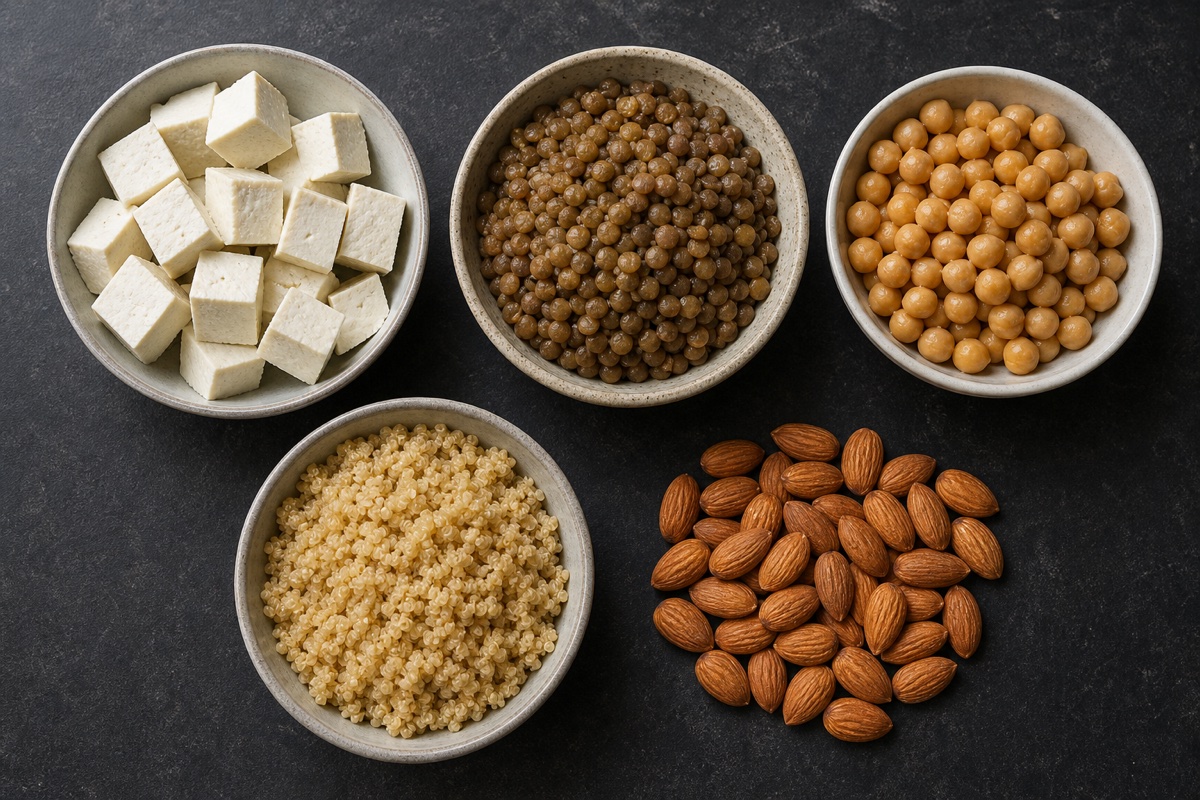
"Plant protein is incomplete, so you can't build muscle on a plant-based diet"
Single plant foods can be lower in specific amino acids, but a varied plant diet across a day covers your needs — combining proteins in one meal isn't necessary.