Do Multivitamins Actually Work?
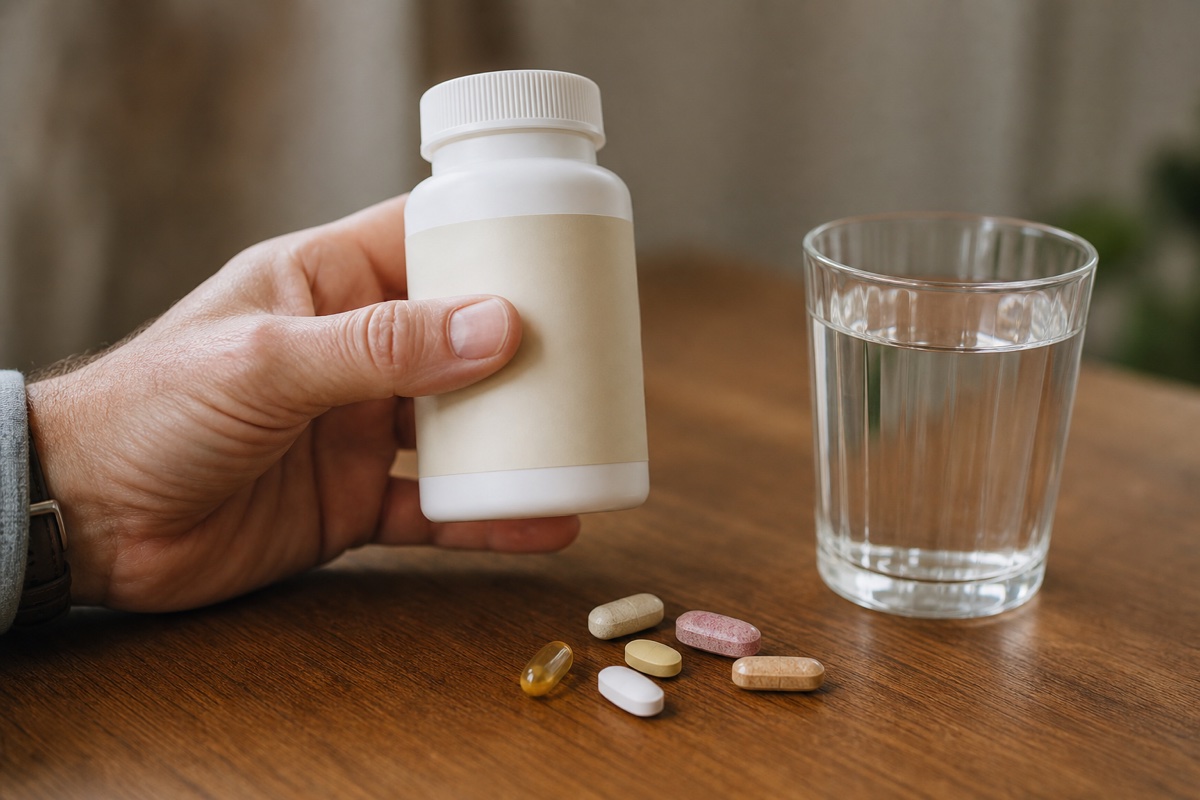
A daily multivitamin is one of the most common supplements on earth. The trial evidence for what it actually does is much smaller than the market for it.

This page discusses a supplement, nootropic, or ingestible health claim.Nothing here is a recommendation to take or avoid a specific product, and none of it is a therapeutic claim. In Australia, supplement claims are regulated by the Therapeutic Goods Administration (TGA) — this page isn't one of those regulated claims, it's a plain-language read of the public research.
Alex Busse is a nutritionist. This is general, research-based information, not individualised medical advice. Read the full disclaimer →
Short answer
For well-nourished adults without a diagnosed deficiency, large trials haven't found multivitamins meaningfully reduce cardiovascular disease or mortality, though one major trial found a modest cancer-incidence reduction in older men. They're useful for specific deficiency-risk groups, not as general insurance.
On this page
The daily multivitamin is one of the most widely taken supplements in the world, largely on the logic of “it can’t hurt, and it might help.” The trial evidence is more specific — and more limited — than that logic assumes.
The largest trial: a real, if narrow, cancer-prevention signal
The Physicians’ Health Study II, published in JAMA in 2012 [1], randomised roughly 14,000 male physicians aged 50 and over to a daily multivitamin or placebo and followed them for over a decade. The result: a statistically significant, though modest, reduction in total cancer incidence in the multivitamin group — but no significant effect on cardiovascular disease, and no effect on cancer or cardiovascular mortality specifically.
This is a genuinely well-designed, large trial, and it’s worth taking seriously — but it’s also worth being precise about what it did and didn’t find. It studied one population (older male physicians in the US, already a relatively well-nourished, health-engaged group), it found a cancer incidence effect but not a mortality effect, and it found no cardiovascular benefit at all.
What the broader evidence review concludes
The US Preventive Services Task Force’s 2022 recommendation statement in JAMA [2] synthesised the wider trial evidence (including the Physicians’ Health Study II and other large RCTs) specifically on the question of using vitamin, mineral, or multivitamin supplementation to prevent cardiovascular disease or cancer in the general adult population. Its conclusion: the current evidence is insufficient to recommend for or against multivitamin use for this purpose in adults without a known deficiency — not “proven not to work,” but genuinely “not enough consistent evidence either way” at a population level.
”Insufficient evidence” is the honest answer here, not a hedge to avoid picking a side.
Who the evidence more clearly supports
This isn’t a blanket case against multivitamins — it’s a case against treating them as a general insurance policy for an already-adequate diet. The clearer evidence-based cases are:
- Diagnosed or likely deficiency — iron, B12, vitamin D, and similar, ideally confirmed rather than assumed.
- Pregnancy — folate supplementation specifically has strong evidence for reducing neural tube defect risk.
- Restrictive diets — strict vegan diets (B12 in particular), or other diets that structurally exclude major nutrient sources.
- Older adults — reduced absorption of certain nutrients (B12, vitamin D) with age is well documented.
The practical takeaway
For a generally well-nourished adult without a specific deficiency risk, a daily multivitamin is not harmful in the doses typically sold, but the trial evidence doesn’t support it as a meaningful disease-prevention strategy either. It’s a reasonable, low-stakes choice — it just isn’t the insurance policy the marketing implies. This is supplement-adjacent content, so the standard note applies: nothing here is a recommendation to take or avoid a specific product.
Common questions
Can multivitamins prevent heart disease or cancer?
See our dedicated myth-vs-fact entry on this exact claim — the short version is: no consistent cardiovascular benefit in trials, and a modest cancer-incidence reduction in one large trial of older men that hasn't been broadly replicated as a general-population recommendation.
Who actually benefits from a multivitamin?
People with a diagnosed or likely deficiency, older adults with reduced nutrient absorption, people on restrictive diets, and specific populations like pregnant women (for folate) have a clearer evidence-based case than a generally well-nourished adult eating a varied diet.
Sources cited
- [1]Gaziano JM, Sesso HD, Christen WG, et al. (2012). Multivitamins in the Prevention of Cancer in Men: The Physicians' Health Study II Randomized Controlled Trial . JAMA.Single RCT
- [2]US Preventive Services Task Force (2022). Vitamin, Mineral, and Multivitamin Supplementation to Prevent Cardiovascular Disease and Cancer: US Preventive Services Task Force Recommendation Statement . JAMA.Meta-analysis