What the Biggest Protein Meta-Analysis Actually Found
Key finding
Pooling 49 studies and modelling the actual dose-response curve, this meta-regression found the muscle-building benefit of additional dietary protein plateaued at around 1.6g per kilogram of bodyweight per day — more protein above that point bought very little extra muscle gain in the pooled data.

Not medical advice — general information based on published research.Full disclaimer →
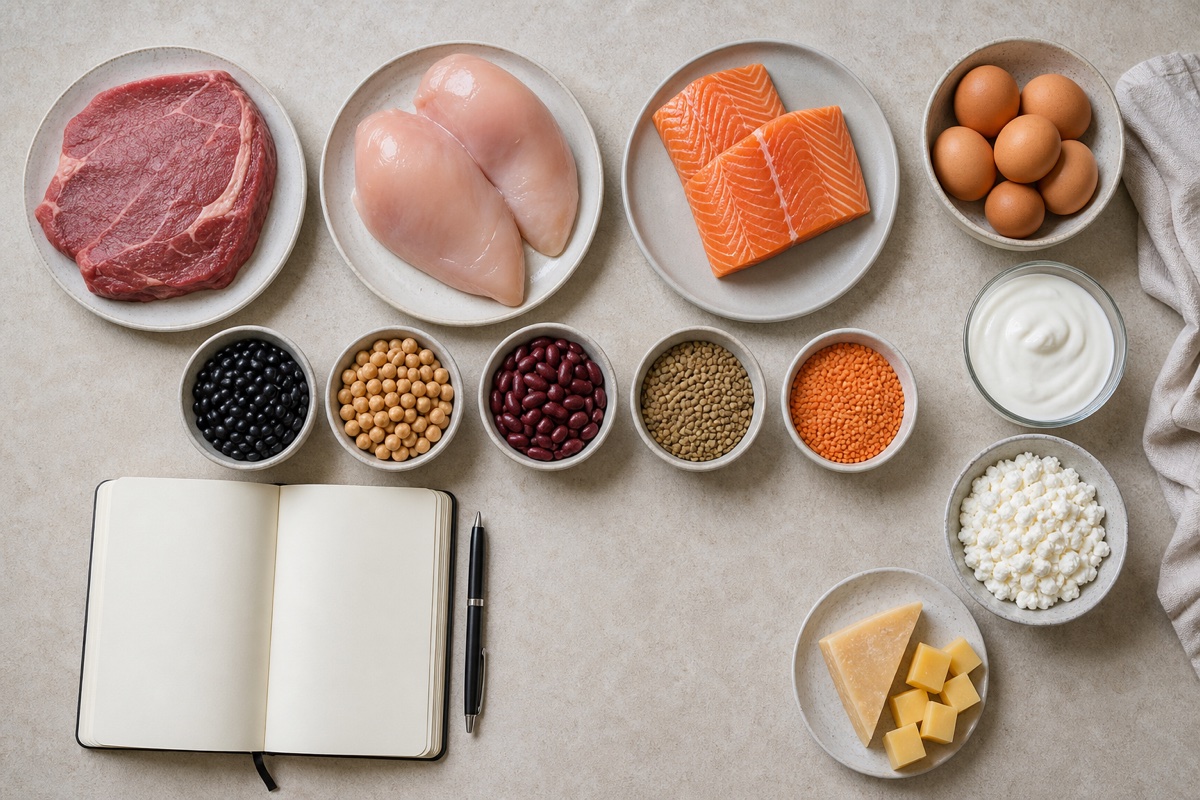
Rather than just asking 'does protein supplementation help build muscle' (yes, it does), this meta-analysis went a step further and modelled how much each additional gram of daily protein was actually worth, at different total intake levels. That distinction — a dose-response model instead of a simple yes/no comparison — is what makes this study more useful than most protein research for answering 'how much is actually enough.'
Most “how much protein” content cites a single number without showing the underlying curve. This meta-analysis is worth reading in more depth precisely because it modelled that curve directly.
What the researchers actually did
Morton and colleagues pooled 49 randomized controlled trials of protein supplementation in resistance-trained or resistance-training adults, covering roughly 1,863 total participants [1]. Rather than a simple pooled comparison of “supplemented vs. not,” they ran a meta-regression — a statistical technique that models how an outcome (muscle gain) changes continuously as a predictor (total daily protein intake) increases across the pooled studies.
What it found
The modelled relationship showed clear benefit from increasing protein intake up to somewhere around 1.6 grams per kilogram of bodyweight per day, after which additional protein bought very little further muscle gain in the pooled data. This is a plateau, not a hard ceiling — going somewhat higher isn’t shown to be harmful, it’s shown to have a rapidly diminishing return.
A related 2018 paper [2] adds a complementary angle: it looked at how much protein a single meal can actually put toward muscle building, relevant to whether protein needs to be evenly distributed across the day. Total daily intake mattered far more than precise per-meal distribution.
Why it matters
This is the paper behind one of the most repeated numbers on this site — “roughly 1.6g/kg/day” — and it’s worth readers seeing where that number actually comes from, rather than taking it on faith. It also directly undercuts the “more protein is always better” framing common in supplement marketing: the data shows a real, quantifiable point of diminishing returns, not an argument for unlimited intake.
Why it matters
This is the single most-cited source behind the 'roughly 1.6g/kg/day' figure used throughout this site's protein content. It matters because supplement and fitness marketing routinely implies more protein is always better, when the actual dose-response data shows diminishing and eventually negligible returns well within a range most people can hit through food alone.
What this study doesn’t tell us
- This is a meta-analysis of pooled trials with different designs, populations, and protein sources — a meta-regression models an average dose-response relationship, but individual response can vary.
- Most included trials studied resistance-trained or resistance-training-naive healthy adults specifically — the findings may not generalise cleanly to endurance athletes, older adults with specific muscle-wasting conditions, or people with significantly different baseline diets.
- The plateau point (around 1.6g/kg/day) is a modelled estimate from the pooled data, not a precise, individually-validated threshold — some individuals may see benefit slightly above or below that average figure.
Sources cited
- [1]Morton RW, Murphy KT, McKellar SR, et al. (2018). A systematic review, meta-analysis and meta-regression of the effect of protein supplementation on resistance training-induced gains in muscle mass and strength in healthy adults . British Journal of Sports Medicine.Meta-analysis
- [2]Schoenfeld BJ, Aragon AA (2018). How much protein can the body use in a single meal for muscle-building? Implications for daily protein distribution . Journal of the International Society of Sports Nutrition.Meta-analysis
Related on thesmartplate.org
How Much Protein Do You Actually Need?
Not the 25g-every-three-hours number the supplement industry sells you — here's what the dose-response trials actually show.
"You need to eat protein within 30 minutes of finishing a workout or you'll lose your gains"
The 'anabolic window' is real but far wider than 30 minutes — total daily protein intake matters far more than post-workout timing.
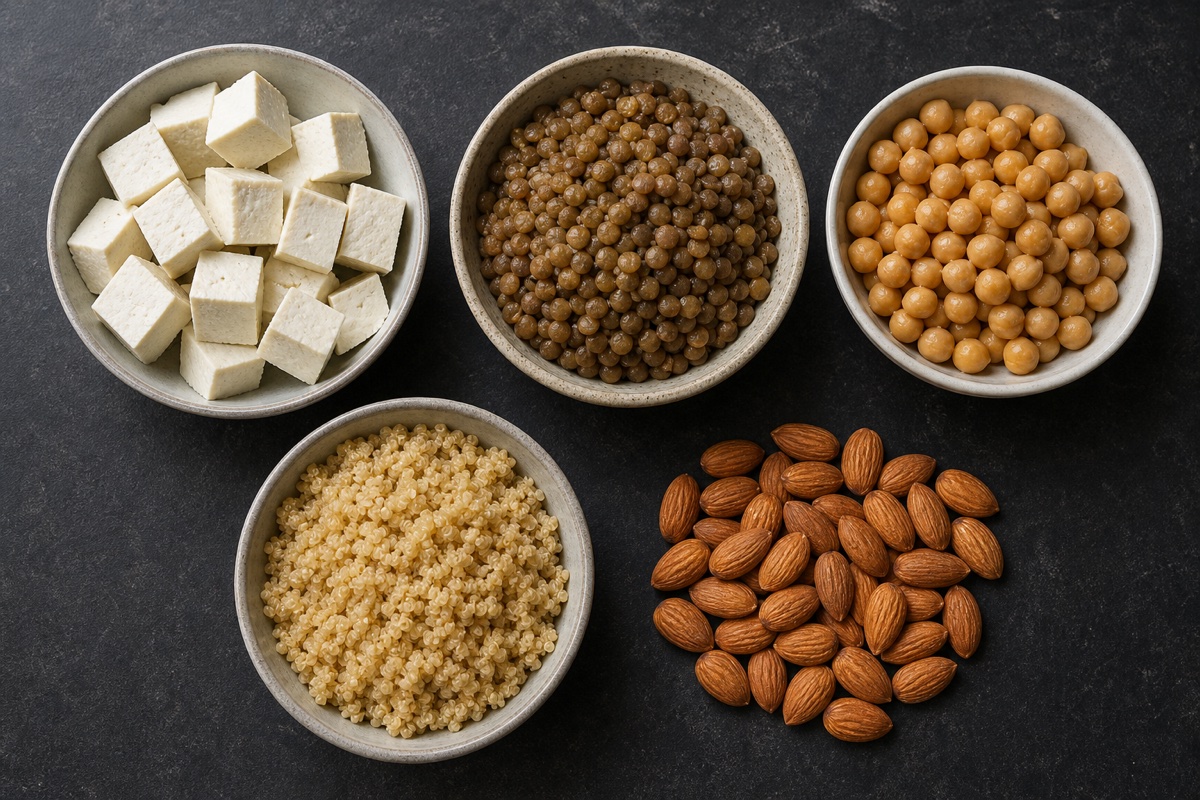
"Plant protein is incomplete, so you can't build muscle on a plant-based diet"
Single plant foods can be lower in specific amino acids, but a varied plant diet across a day covers your needs — combining proteins in one meal isn't necessary.